Octopus Continuous Line Art: A Modern Ink Flow
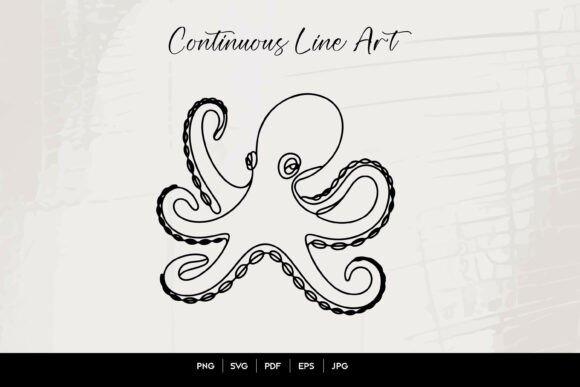
When you need a design element that captures fluidity and intelligence in a single gesture, Octopus Continuous Line Art stands out immediately. This collection is not just another set of stock illustrations; it is a distinct visual language derived from the technique of one-stroke drawing. By maintaining an unbroken line, the artist captures the organic movement of the octopus, creating a sense of speed, modernity, and elegance. Whether you are a graphic designer working on a tight deadline or a small business owner curating your brand’s visual identity, understanding the nuance of this art style is key to using it effectively. It bridges the gap between abstract doodles and realistic illustration, offering a versatile asset for a wide range of creative projects.
Visual Character and Stylistic Appeal
The defining characteristic of Octopus Continuous Line Art is the absence of breaks. The pen (or digital brush) travels from the start of the head, down through the mantle, and winds through the tentacles without ever lifting. This creates a dynamic, looping structure that feels hand-drawn and authentic. Visually, this style leans heavily into minimalism. Because the line never breaks, the illustration relies on negative space and the viewer’s imagination to fill in the details. The result is a sophisticated, airy design that doesn’t clutter a layout.
The personality of this art style is versatile. Depending on the thickness of the stroke, it can feel playful and "cute" (perfect for children's brands or casual merchandise) or sleek and "modern" (ideal for tech startups or luxury branding). It possesses a trendy, aesthetic quality that resonates well with current design trends favoring hand-drawn imperfection over rigid vector perfection. The black and white nature of the standard line art makes it incredibly adaptable; it acts as a chameleon, fitting into neon cyberpunk palettes or rustic coastal themes with equal ease.
Strategic Applications for Designers and Marketers
Finding the right context for Octopus Continuous Line Art is where the real value lies. This isn't just for t-shirt mockups. As a design asset, it has significant utility across multiple industries.
- Brand Identity and Logo Design: For businesses in the marine sector, aquariums, seafood restaurants, or even intellectual property firms (symbolizing multitasking), this line art offers a unique logo mark. It is scalable and retains its character at both large and small sizes, which is a crucial requirement for effective logo design.
- Packaging Design: In the craft beverage or cosmetic industries, a continuous line drawing suggests artisanal quality and care. It works exceptionally well on minimalist packaging where the label needs to communicate premium quality without overwhelming the product information.
- Editorial and Web Design: Bloggers and publishers can use these illustrations as spot illustrations to break up text-heavy pages. A small octopus sketch in the margin or a large, faded background image can add texture and personality to a website without slowing down load times, especially when optimized as SVGs.
- Apparel and Merchandise: The "one line" aesthetic is currently trending in the fashion world. It translates beautifully to embroidery files for hats and polos, or high-contrast screen printing for tote bags and posters.
Furthermore, the digital landscape is hungry for content that feels human. Using Octopus Continuous Line Art in social media graphics helps cut through the noise of overly polished, generic stock photography. It provides a tactile, artistic touch that encourages engagement.
Technical Execution and File Versatility
A major advantage of sourcing this specific art collection is the comprehensive file package. You aren't just getting a flat image; you are getting a toolkit. The package includes SVG, PNG, EPS, PDF, and JPG formats. Here is why that matters for your workflow:
- SVG and EPS (Vector Formats): These are the workhorses for professional design. If you are working in Adobe Illustrator, Affinity Designer, or Inkscape, these formats allow you to scale the octopus to the size of a billboard without losing quality. You can also easily edit the stroke weight or color to match your specific brand palette.
- PNG (Transparent Background): Essential for layering. If you are placing the octopus over a photograph or a textured background in Canva or Photoshop, the PNG format ensures you don't have a white box around your design.
- PDF and JPG: These are ideal for quick mockups, presentations, or print-ready files where the design is fixed.
When integrating this art into your projects, consider the "stroke weight" relative to your typography. If you are pairing the octopus with a heavy sans serif font, the line art might need to be thickened slightly to maintain visual hierarchy. Conversely, if you are using a delicate script font, the thin, continuous line will complement it perfectly, creating a harmonious and balanced composition.
Practical Guidance for Implementation
Before finalizing a design using Octopus Continuous Line Art, run a few quick tests. First, check the scalability. Zoom in to 100% on your intended output—whether that is a mobile screen or a printed flyer—to ensure the line remains crisp. Second, evaluate the negative space. Because the octopus has eight tentacles, the interior spaces can become complex. Ensure that at smaller sizes, the tentacles don't merge into a dark blob. If they do, switch to the vector version and increase the spacing.
Finally, think about color theory. While black and white is classic, changing the line color can drastically alter the mood. A deep navy blue conveys trust and professionalism; a coral pink suggests playfulness and warmth. By treating Octopus Continuous Line Art not just as a picture, but as a flexible design element, you unlock its full potential to elevate your creative projects. It is a timeless addition to any designer's library, offering a perfect blend of nature, abstraction, and modern aesthetics.